
by admin
Share
by admin
Share
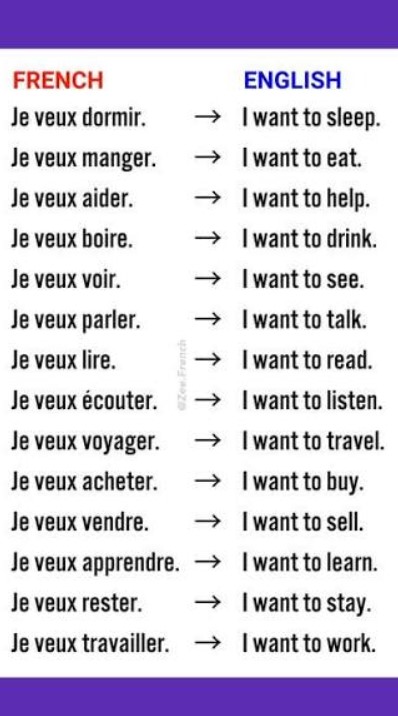
Assuming you are deciding from a global and career-oriented perspective, you should almost certainly learn English first if you are not already fluent in it.
English is the undisputed global lingua franca, while French is a major regional and international language with immense cultural and diplomatic value. Here is a breakdown to help you decide based on your goals:
1. Why Choose English? (The Global Standard)
-
The Universal Language of Tech & Business: As seen in IT translation, software development, science, aviation, and international trade, English dominates completely.
-
Massive Career ROI: Proficiency in English unlocks remote work opportunities, multinational corporations, and access to the vast majority of global internet content, documentation, and educational resources.
-
Essential Foundation: Even if you plan to learn other languages later, English is almost always the bridge language used to learn them.
2. Why Choose French? (The Strategic Complement)
-
Global Reach & Diplomacy: French is spoken by over 300 million people across 5ارات (continents) and is an official language of the United Nations, the European Union, the Olympics, and many international organizations.
-
Immigration & Education: If you are planning to immigrate, study, or work in Canada (especially Quebec) or parts of Europe and Africa, French is a massive asset or a mandatory requirement.
-
Culture and Luxury: It opens doors in fashion, gastronomy, international relations, and literature.
Comparison at a Glance
| Feature | English | French |
| Global Speakers | ~1.5 billion (Native + Non-native) | ~320 million |
| Primary Domain | Tech, global business, science, internet | Diplomacy, arts, international organizations, Canada/Francophone Africa |
| Learning Curve | Easier foundational grammar, but complex idioms | Moderate to hard (gendered nouns, verb conjugations) |
The Verdict: If your English is basic or intermediate, prioritize English until you reach professional fluency. If you are already fluent in English and looking to expand your portfolio (perhaps for international organizations, localization markets, or immigration), French is an exceptional second choice.
STAY IN THE LOOP
Subscribe to our free newsletter.
Leave A Comment

French is one of the world’s major international languages, widely used in business, diplomacy, education, tourism, and international cooperation. As communication between French-speaking countries and the rest of the world continues to create professional opportunities, skilled French interpreters play an important role in helping people communicate across language barriers. If you are passionate about languages

French and English are two widely used languages in international business, diplomacy, education, tourism, and global communication. As organizations continue to work across linguistic and cultural boundaries, the ability to communicate accurately between these languages remains valuable. For people who enjoy languages and cross-cultural communication, becoming a French and English interpreter can be a rewarding

English is one of the most widely used languages for international communication. As businesses, organizations, and individuals increasingly work across borders, the demand for professional English interpreters continues to grow. If you have strong English skills, enjoy communicating with people, and are interested in working in a multicultural environment, becoming an English interpreter can be

If you want to become a French interpreter, you’ll need more than just strong French—you need to develop professional interpreting skills, subject knowledge, and experience. A practical path Reach a high level in French Aim for C1–C2 French, especially listening and speaking. If you’re in Vietnam, the DELF/DALF can provide formal evidence of your French