
by admin
Share
by admin
Share
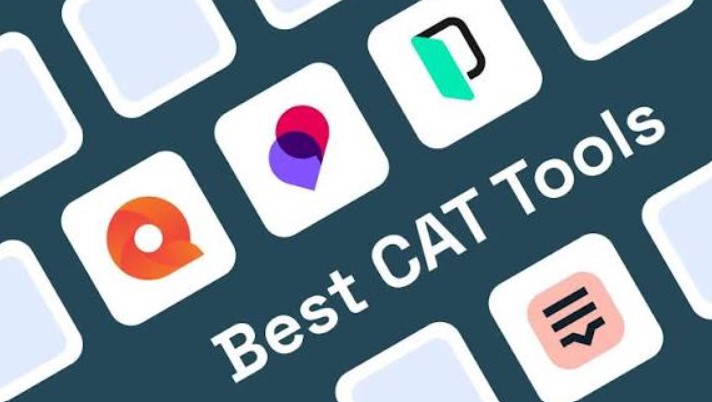
There’s no universal “best” CAT tool; the right choice depends on whether you’re a freelancer, LSP, or enterprise localization team.
| CAT tool | Particularly suited to | Key strengths |
|---|---|---|
| Trados Studio | Professional translators, LSPs, enterprises | Mature TM and terminology management, broad ecosystem, extensive integrations |
| memoQ | Freelancers and LSP teams | Strong project collaboration, translation resources, and interoperability |
| Phrase | SaaS and product localization teams | Cloud workflows, integrations, collaboration, and localization automation |
| Smartcat | Distributed teams and businesses | Cloud-based workflow, collaboration, and AI-oriented translation |
| Wordfast | Freelancers | Lightweight workflows and broad CAT compatibility |
| OmegaT | Budget-conscious professionals | Free and open-source desktop CAT environment |
My Practical Shortlist
-
Trados — A strong choice when client compatibility and a mature professional ecosystem matter. It supports desktop and cloud-based workflows, along with a large ecosystem of integrations and extensions.
-
memoQ — Worth considering for sophisticated freelance or agency workflows, especially when project resources, terminology, and interoperability are important.
-
Phrase — Particularly relevant to modern software and SaaS localization. Its cloud-based environment supports collaborative localization workflows and integrations.
-
Smartcat — Attractive when browser-based collaboration and integrated AI-assisted translation workflows are priorities.
-
Wordfast — A practical option for freelance translators looking for a relatively lightweight CAT environment.
-
OmegaT — A notable free and open-source option, particularly useful for translators who want to avoid subscription costs.
What Matters Most in 2026
Don’t choose a CAT tool solely based on AI or machine-translation quality. Professional localization workflows should also be evaluated based on:
-
Translation memory (TM) capabilities
-
Terminology management
-
Quality assurance (QA)
-
File-format support
-
CMS, Git, and other integrations
-
Collaboration features
-
Security and data protection
-
Project/package compatibility with clients
-
AI-assisted translation and post-editing capabilities
-
Pricing and scalability
For professional localization, Trados, memoQ, and Phrase are three major platforms worth investigating first. However, the most suitable option depends heavily on your specific workflow, client requirements, language pairs, and project volume.
STAY IN THE LOOP
Subscribe to our free newsletter.
Leave A Comment
Becoming a professional Chinese interpreter requires more than simply speaking Chinese. You need strong language skills, excellent listening and speaking abilities, cultural awareness, and the ability to communicate information accurately and quickly. Here is a practical step-by-step path. 1. Master Chinese Start by developing a strong command of Mandarin Chinese. Focus on: Pronunciation and tones Listening comprehension Speaking fluency Vocabulary and grammar Formal and business Chinese Common idioms
Choosing whether to learn Chinese or French depends entirely on your personal goals, career ambitions, and lifestyle preferences. Both languages offer incredible value, but they open doors to entirely different economic spheres, cultures, and career paths. Here is a side-by-side comparison to help you decide which language aligns best with your future: 1. Chinese: The

Steps to Become a Medical Interpreter Become highly proficient in two languages Develop strong listening, speaking, reading, and vocabulary skills in both languages. Medical interpreting requires more than conversational fluency—you need to understand medical concepts and communicate them accurately. Learn basic medical terminology Study: Anatomy and physiology Common diseases and symptoms Medications Medical tests and

Choosing between French and Spanish depends heavily on your geographic location, professional goals, and personal interests. Spanish generally offers wider utility globally and a faster learning curve for English speakers, while French provides unique advantages in international diplomacy, specific career sectors, and cultural reach. Spanish Advantages Global Reach: Spoken by over 550 million people, making