
by admin
Share
by admin
Share
Australia is incredibly rich linguistically—both ancient and modern. Here’s a clear breakdown 👇
1️⃣ Aboriginal & Torres Strait Islander Languages (Indigenous languages)
🕰️ Oldest continuous languages on Earth
-
Spoken for at least 60,000 years
-
Before European colonisation, there were:
-
250–300 distinct languages
-
700+ dialects
-
🗺️ Language families
Major groupings include:
-
Pama–Nyungan (covers ~90% of the continent)
-
Non–Pama–Nyungan (mainly northern Australia)
🗣️ Current situation
-
Around 120–150 languages still spoken today
-
Only ~13 languages are considered strong (spoken by children daily)
-
Many are endangered, but revitalisation programs are growing
🌱 Well-known Indigenous languages
-
Pitjantjatjara
-
Yolŋu Matha
-
Arrernte
-
Warlpiri
-
Tiwi
-
Kala Lagaw Ya (Torres Strait)
👉 These languages often encode:
-
Deep ecological knowledge
-
Kinship systems
-
Spiritual relationships to land (“Country”)
2️⃣ English in Australia
🇦🇺 Australian English (de facto national language)
Not officially declared, but used in:
-
Government
-
Education
-
Media
-
Law
🎙️ Main varieties
-
Broad Australian (classic “Aussie accent”)
-
General Australian (most common)
-
Cultivated Australian (closer to British RP)
🧠 Features
-
Unique slang (arvo, mate, servo)
-
Rising intonation (“Australian Question Intonation”)
-
Aboriginal words adopted into English:
-
kangaroo, boomerang, billabong
-
3️⃣ Community & Migrant Languages
Australia is one of the most multilingual countries in the world 🌐
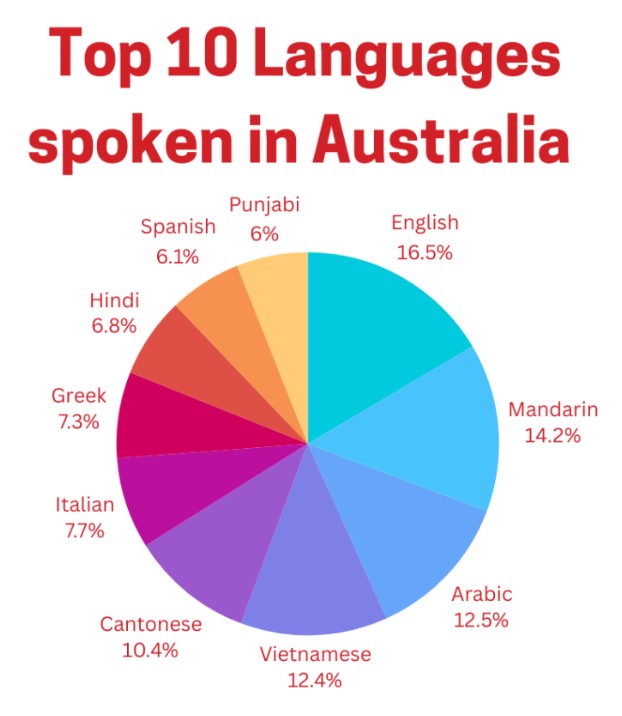
🏙️ Most spoken languages after English
-
Mandarin
-
Arabic
-
Vietnamese
-
Cantonese
-
Punjabi
-
Greek
-
Italian
Over 300 languages are spoken in Australian homes today.
4️⃣ Sign Languages
🤟 Auslan (Australian Sign Language)
-
Primary language of the Deaf community
-
Recognised officially (but not constitutionally)
-
Has its own grammar—not signed English
5️⃣ Quick comparison table
| Category | Examples | Status |
|---|---|---|
| Indigenous | Warlpiri, Yolŋu Matha | Endangered → revitalising |
| National | Australian English | Dominant |
| Migrant | Mandarin, Arabic | Growing |
| Sign | Auslan | Officially recognised |
🧠 One-line takeaway
Australia has no official language—but it has one of the world’s oldest linguistic heritages and one of its most multilingual societies.
If you want, I can:
-
explain how Aboriginal languages differ structurally from English
-
show which languages are spoken in each Australian state
-
or compare Australia’s language situation with New Zealand or Canada
Just tell me where you want to go next 🙂
STAY IN THE LOOP
Subscribe to our free newsletter.
Leave A Comment

French is one of the world’s major international languages, widely used in business, diplomacy, education, tourism, and international cooperation. As communication between French-speaking countries and the rest of the world continues to create professional opportunities, skilled French interpreters play an important role in helping people communicate across language barriers. If you are passionate about languages
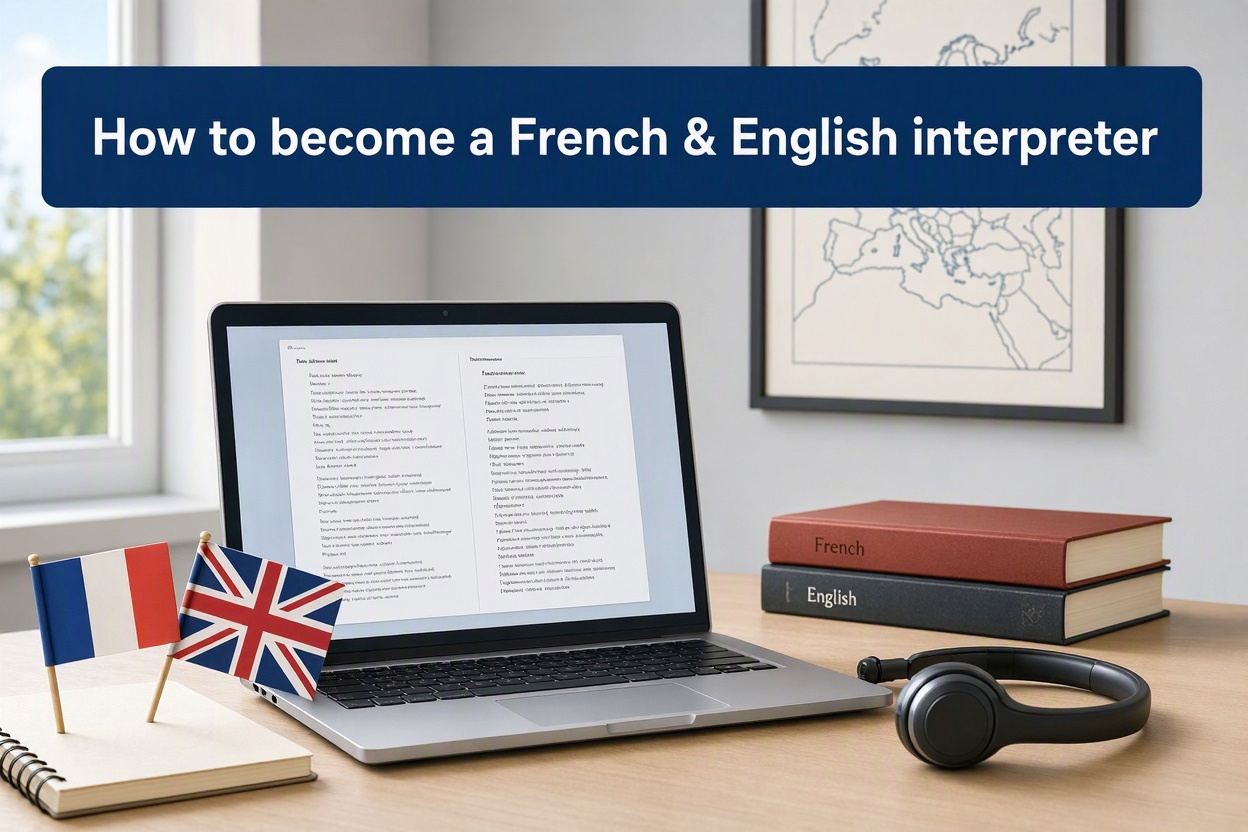
French and English are two widely used languages in international business, diplomacy, education, tourism, and global communication. As organizations continue to work across linguistic and cultural boundaries, the ability to communicate accurately between these languages remains valuable. For people who enjoy languages and cross-cultural communication, becoming a French and English interpreter can be a rewarding

English is one of the most widely used languages for international communication. As businesses, organizations, and individuals increasingly work across borders, the demand for professional English interpreters continues to grow. If you have strong English skills, enjoy communicating with people, and are interested in working in a multicultural environment, becoming an English interpreter can be

If you want to become a French interpreter, you’ll need more than just strong French—you need to develop professional interpreting skills, subject knowledge, and experience. A practical path Reach a high level in French Aim for C1–C2 French, especially listening and speaking. If you’re in Vietnam, the DELF/DALF can provide formal evidence of your French