
by admin
Share
by admin
Share
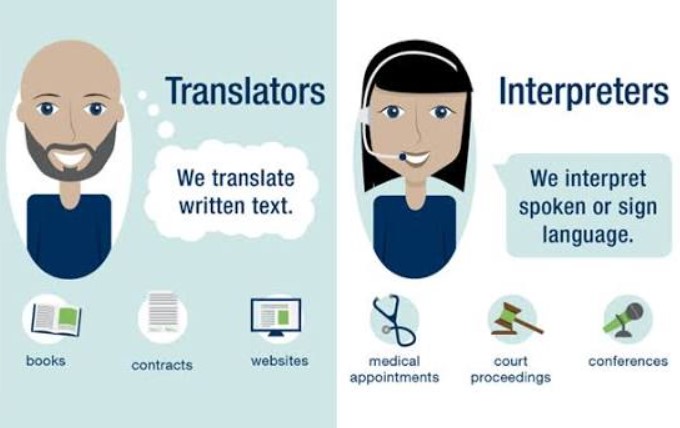
If you’re deciding between translation (written language) and interpretation (spoken language), the better choice depends on your strengths, personality, and career goals.
Here’s a comparison:
| Translator | Interpreter |
|---|---|
| Works with written texts | Works with spoken conversations |
| Has time to research and revise | Must think and respond instantly |
| Requires excellent writing skills | Requires excellent listening and speaking skills |
| Often works remotely | Often works on-site or in meetings/events |
| More affected by AI | Less affected by AI in complex, live interactions |
Choose translation if you:
- Enjoy reading and writing.
- Are detail-oriented and patient.
- Prefer working independently.
- Want the flexibility of freelance or remote work.
To stay competitive, it’s helpful to specialize in a field such as legal, medical, technical, or financial translation, and learn to use AI tools effectively.
Choose interpretation if you:
- Think quickly under pressure.
- Have strong speaking and listening skills.
- Enjoy interacting with people.
- Don’t mind working in dynamic environments like conferences, hospitals, courts, or business meetings.
Interpretation remains difficult to automate because it requires real-time judgment, cultural awareness, and interpersonal communication.
Which has better career prospects?
At the moment:
- Translation is changing rapidly because AI can handle many routine texts.
- Interpretation generally offers stronger long-term demand for highly skilled professionals, especially in specialized settings.
My suggestion
If you have strong communication skills and enjoy speaking, interpretation is likely to offer broader opportunities in the coming years.
If you love writing and analyzing language, translation is still an excellent career—but it’s best to combine it with expertise in a specific industry and proficiency with AI-assisted translation tools.
If you’re still in school or university, developing both skills is ideal. Many language professionals translate written documents, interpret at meetings or events, and edit AI-generated translations, making them more versatile and employable.
STAY IN THE LOOP
Subscribe to our free newsletter.
Leave A Comment
French is one of the world’s major international languages, widely used in business, diplomacy, education, tourism, and international cooperation. As communication between French-speaking countries and the rest of the world continues to create professional opportunities, skilled French interpreters play an important role in helping people communicate across language barriers. If you are passionate about languages
French and English are two widely used languages in international business, diplomacy, education, tourism, and global communication. As organizations continue to work across linguistic and cultural boundaries, the ability to communicate accurately between these languages remains valuable. For people who enjoy languages and cross-cultural communication, becoming a French and English interpreter can be a rewarding

English is one of the most widely used languages for international communication. As businesses, organizations, and individuals increasingly work across borders, the demand for professional English interpreters continues to grow. If you have strong English skills, enjoy communicating with people, and are interested in working in a multicultural environment, becoming an English interpreter can be

If you want to become a French interpreter, you’ll need more than just strong French—you need to develop professional interpreting skills, subject knowledge, and experience. A practical path Reach a high level in French Aim for C1–C2 French, especially listening and speaking. If you’re in Vietnam, the DELF/DALF can provide formal evidence of your French