
by admin
Share
by admin
Share

Steps to Become a Medical Interpreter
- Become highly proficient in two languages
- Develop strong listening, speaking, reading, and vocabulary skills in both languages.
- Medical interpreting requires more than conversational fluency—you need to understand medical concepts and communicate them accurately.
- Learn basic medical terminology
Study:- Anatomy and physiology
- Common diseases and symptoms
- Medications
- Medical tests and procedures
- Emergency terminology
- Common hospital and clinical expressions
- Learn professional interpreting skills
Practice:- Consecutive interpreting
- Memory and note-taking
- Accurate message transfer
- Managing difficult or emotional conversations
- Maintaining professional boundaries
- Learn medical-interpreter ethics
You should understand principles such as:- Confidentiality
- Accuracy and completeness
- Impartiality
- Professional boundaries
- Patient privacy
- Avoiding personal medical advice
- Complete a medical interpreter training program
A formal training course can teach you healthcare-specific interpreting techniques, ethics, terminology, and professional standards. - Get certified if required or beneficial
Certification requirements depend on the country and language pair. In the U.S., two major national certification organizations are CCHI and NBCMI. Check their current eligibility and examination requirements before applying. - Build practical experience
Start practicing through role-plays, volunteer opportunities, language-access organizations, clinics, hospitals, or interpreter agencies. - Choose your work setting
Medical interpreters can work:- In hospitals and clinics
- For medical interpreter agencies
- Remotely by video
- By telephone
- As freelance interpreters
- Continue developing your specialization
After gaining experience, you can develop expertise in areas such as emergency medicine, oncology, pediatrics, obstetrics, mental health, or surgery.
A simple roadmap
Bilingual proficiency → Medical terminology → Interpreter training → Ethics & skills → Certification (if applicable) → Practice → First interpreting job → Specialization
STAY IN THE LOOP
Subscribe to our free newsletter.
Leave A Comment
French is one of the world’s major international languages, widely used in business, diplomacy, education, tourism, and international cooperation. As communication between French-speaking countries and the rest of the world continues to create professional opportunities, skilled French interpreters play an important role in helping people communicate across language barriers. If you are passionate about languages

French and English are two widely used languages in international business, diplomacy, education, tourism, and global communication. As organizations continue to work across linguistic and cultural boundaries, the ability to communicate accurately between these languages remains valuable. For people who enjoy languages and cross-cultural communication, becoming a French and English interpreter can be a rewarding
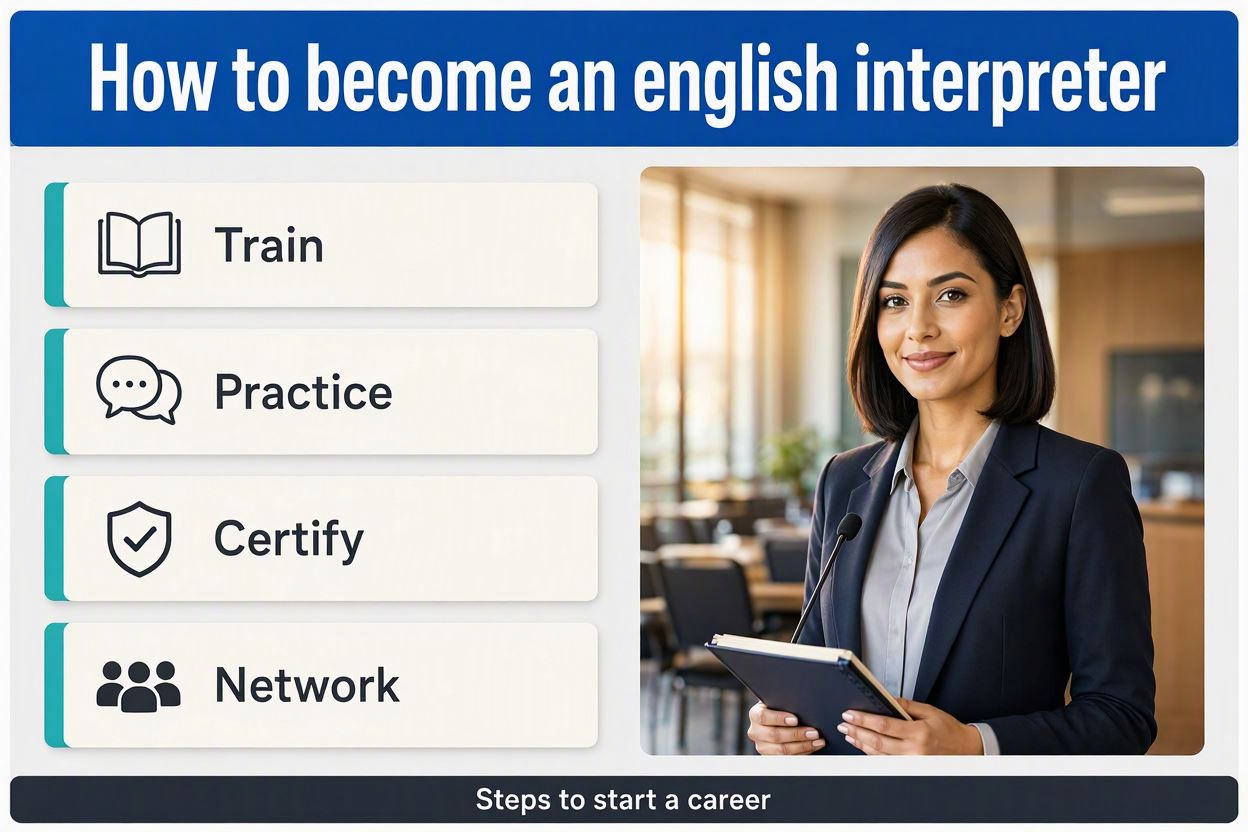
English is one of the most widely used languages for international communication. As businesses, organizations, and individuals increasingly work across borders, the demand for professional English interpreters continues to grow. If you have strong English skills, enjoy communicating with people, and are interested in working in a multicultural environment, becoming an English interpreter can be

If you want to become a French interpreter, you’ll need more than just strong French—you need to develop professional interpreting skills, subject knowledge, and experience. A practical path Reach a high level in French Aim for C1–C2 French, especially listening and speaking. If you’re in Vietnam, the DELF/DALF can provide formal evidence of your French