by admin
Share
by admin
Share
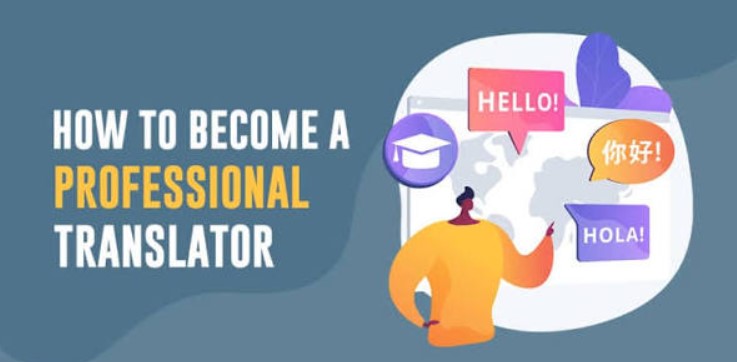
Becoming a technical translator requires a unique combination of high-level linguistic fluency, deep comprehension of engineering or industrial domains, and meticulous attention to detail. Because technical translations involve machinery, software, patents, and safety protocols where errors can lead to equipment failure or legal liability, it is one of the most lucrative and respected branches of translation.
Here is a step-by-step roadmap to building a professional career as a technical translator.
Step 1: Master Your Working Languages
Just like any specialized translation branch, you need mastery over your source and target languages.
-
Native Fluency in the Target Language: You must write naturally and flawlessly in your native tongue.
-
Technical Literacy in the Source Language: You need the ability to read and completely comprehend complex, dense, and jargon-heavy source texts without misinterpreting the core logic.
Step 2: Acquire Strong Domain and Engineering Knowledge
Unlike medical translation (which focuses on human biology), technical translation deals with the physical and digital sciences. You do not necessarily need an engineering degree, but you must think like an engineer.
-
Formal Background: A degree or background in engineering, computer science, physics, architecture, or applied sciences is a massive asset.
-
Self-Education & Research:
-
Study mechanics, electronics, civil engineering concepts, or IT depending on your sub-discipline.
-
Read patents, user manuals, engineering whitepapers, and technical specifications in both languages.
-
Learn how machinery, circuits, or software features physically work so you can translate their functions accurately rather than just translating word-for-word.
-
Step 3: Master Technical Translation Tools and Formatting (CAT & DTP)
Technical translation is deeply intertwined with technology and layout constraints.
-
CAT Tools (Computer-Assisted Translation): Master tools like SDL Trados Studio, memoQ, or Phrase. Technical texts are heavily repetitive, making Translation Memories (TMs) and termbases essential for consistency.
-
Terminology Management: Learn how to build and import glossaries. Technical clients have strict company-specific or industry-standard glossaries that you must follow meticulously.
-
DTP (Desktop Publishing) & File Formats: Technical documents often come in complex formats like AutoCAD (DWG), XML, HTML, InDesign, or heavily formatted PDFs. Familiarity with DTP basics ensures that schematics, diagrams, and layout alignments remain intact.
Step 4: Choose Your Technical Niche
Technical translation is vast. Focusing on a specific sector allows you to build a powerful glossary and deep expertise:
| Sub-discipline | Common Document Types |
| Engineering & Machinery | User manuals, assembly guides, factory maintenance protocols, equipment specifications. |
| Information Technology (IT) & Software | Software localization, UI/UX strings, API documentations, cybersecurity manuals. |
| Automotive & Aerospace | Vehicle repair manuals, technical blueprints, avionics safety regulations. |
| Patents & Intellectual Property | Patent applications, legal-technical claims, prior art documents. |
| Energy & Construction | Oil & gas extraction reports, civil engineering blueprints, environmental impact assessments. |
Step 5: Obtain Certifications and Industry Credentials
While your portfolio and practical tests matter most to clients, credentials prove your professional standing.
-
General/Technical Certification: Earn certifications from recognized translation associations (e.g., ATA certification, ITI or CIOL in the UK). Some associations offer specific testing or endorsements in scientific/technical fields.
-
Engineering/IT Certifications: Having external certifications (like CompTIA, Cisco, or engineering fundamentals) can set you apart drastically from other linguists.
Step 6: Build a Portfolio and Gain Experience
Technical clients are strict about quality control. Breaking into the field requires a strategic approach:
-
Start with Technical Editing/Proofreading: Reviewing manuals or software strings translated by others helps you learn standard industry phrasing.
-
Translate Sample Documents: If you lack professional technical samples, translate a complex public user manual (e.g., an open-source software guide or a camera manual) and format it cleanly to show prospective clients.
-
Understand Safety and Compliance: Learn international standards such as ISO, IEC, or ANSI guidelines, as technical manuals often legally require specific compliance terminology.
Step 7: Target the Right Clients and Network
Technical translators rarely work with direct individual consumers; instead, they work with institutional clients:
-
Language Service Providers (LSPs): Apply to major translation agencies that handle industrial, engineering, and tech accounts.
-
Direct Industry Clients: Reach out to manufacturing plants, software development houses, automotive companies, and hardware manufacturers.
-
Join Professional Networks: Connect with other technical translators through LinkedIn and translation associations to share glossaries, best practices, and sub-contracting opportunities.
STAY IN THE LOOP
Subscribe to our free newsletter.
Leave A Comment

Are you passionate about languages and interested in building a career in translation? Becoming a French-English translator can be an exciting and rewarding professional path. With French widely spoken across Europe, Africa, North America, and other regions, the demand for accurate French-English translation continues to create opportunities in international business, education, tourism, law, and many
In today’s interconnected world, effective communication across languages is more important than ever. Businesses expand internationally, people travel across borders, and organizations increasingly work with clients and partners from different cultural backgrounds. As a result, professional interpreters play an essential role in helping people understand one another. If you are fluent in two or more

As international business, travel, healthcare, and cross-cultural communication continue to expand, the demand for qualified language professionals is growing. Vietnamese interpreters play an important role in helping people communicate across language barriers, whether in business meetings, medical appointments, legal consultations, or international conferences. Becoming a professional Vietnamese interpreter requires more than fluency in Vietnamese and

French is one of the world’s major international languages, widely used in business, diplomacy, education, tourism, and international cooperation. As communication between French-speaking countries and the rest of the world continues to create professional opportunities, skilled French interpreters play an important role in helping people communicate across language barriers. If you are passionate about languages