
by admin
Share
by admin
Share
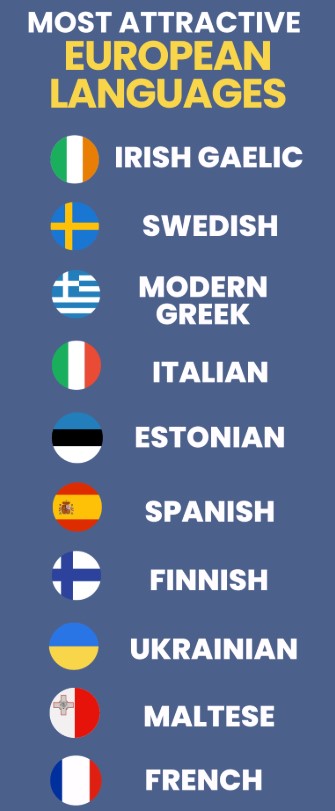
“Most beautiful” is subjective—but globally, some languages are widely admired for their sound, rhythm, and elegance. Here’s a popular Top 10, with why people find each one beautiful:
🌍 🎼 Top 10 Most Beautiful Languages
🥇 1. Italian language
👉 Often called the language of music
- Smooth, flowing vowels
- Words end in vowels → very melodic
- Used in opera worldwide
🥈 2. French language
👉 Known as the language of love
- Soft pronunciation
- Elegant rhythm
- Romantic tone
🥉 3. Spanish language
👉 Warm and expressive
- Clear pronunciation
- Strong, rhythmic flow
- Very lively and emotional
4. Japanese language
👉 Calm and balanced
- Simple syllable structure
- Gentle, rhythmic sound
- Polite speech adds elegance
5. Arabic language
👉 Deep and poetic
- Rich, resonant sounds
- Strong connection to poetry and calligraphy
- Unique musical quality
6. Portuguese language
👉 Soft and emotional
- Sounds like a mix of Spanish + French
- Slight “melancholic” tone (especially Brazilian Portuguese)
7. Korean language
👉 Smooth and modern
- Flowing speech
- Balanced tone
- Pleasant rhythm in conversation
8. Greek language
👉 Ancient yet lyrical
- Rich history
- Musical intonation
- Unique sound patterns
9. English language
👉 Versatile beauty
- Can sound powerful, poetic, or simple
- Huge vocabulary → expressive
10. Chinese language
👉 Musical tones
- Tonal variations create melody
- Compact and expressive
- Deep cultural feel
🎯 What makes a language “beautiful”?
People usually mean:
- 🎵 Melody (Italian, Spanish)
- 💬 Softness (French, Portuguese)
- 🧘 Rhythm (Japanese, Korean)
- 📜 Depth/history (Arabic, Greek)
🧠 Interesting fact
👉 For Vietnamese speakers:
- You may find Chinese language or Korean language more pleasant
because: - Similar tone sensitivity
- Familiar sound patterns
💡 Final thought
👉 “Beautiful” depends on:
- Your ears
- Your culture
- What you’re used to hearing
STAY IN THE LOOP
Subscribe to our free newsletter.
Leave A Comment

French is one of the world’s major international languages, widely used in business, diplomacy, education, tourism, and international cooperation. As communication between French-speaking countries and the rest of the world continues to create professional opportunities, skilled French interpreters play an important role in helping people communicate across language barriers. If you are passionate about languages

French and English are two widely used languages in international business, diplomacy, education, tourism, and global communication. As organizations continue to work across linguistic and cultural boundaries, the ability to communicate accurately between these languages remains valuable. For people who enjoy languages and cross-cultural communication, becoming a French and English interpreter can be a rewarding

English is one of the most widely used languages for international communication. As businesses, organizations, and individuals increasingly work across borders, the demand for professional English interpreters continues to grow. If you have strong English skills, enjoy communicating with people, and are interested in working in a multicultural environment, becoming an English interpreter can be

If you want to become a French interpreter, you’ll need more than just strong French—you need to develop professional interpreting skills, subject knowledge, and experience. A practical path Reach a high level in French Aim for C1–C2 French, especially listening and speaking. If you’re in Vietnam, the DELF/DALF can provide formal evidence of your French