
by admin
Share
by admin
Share
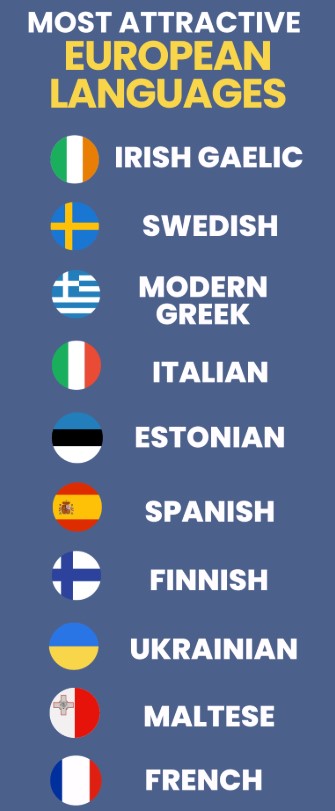
“Most beautiful” is subjective—but globally, some languages are widely admired for their sound, rhythm, and elegance. Here’s a popular Top 10, with why people find each one beautiful:
🌍 🎼 Top 10 Most Beautiful Languages
🥇 1. Italian language
👉 Often called the language of music
- Smooth, flowing vowels
- Words end in vowels → very melodic
- Used in opera worldwide
🥈 2. French language
👉 Known as the language of love
- Soft pronunciation
- Elegant rhythm
- Romantic tone
🥉 3. Spanish language
👉 Warm and expressive
- Clear pronunciation
- Strong, rhythmic flow
- Very lively and emotional
4. Japanese language
👉 Calm and balanced
- Simple syllable structure
- Gentle, rhythmic sound
- Polite speech adds elegance
5. Arabic language
👉 Deep and poetic
- Rich, resonant sounds
- Strong connection to poetry and calligraphy
- Unique musical quality
6. Portuguese language
👉 Soft and emotional
- Sounds like a mix of Spanish + French
- Slight “melancholic” tone (especially Brazilian Portuguese)
7. Korean language
👉 Smooth and modern
- Flowing speech
- Balanced tone
- Pleasant rhythm in conversation
8. Greek language
👉 Ancient yet lyrical
- Rich history
- Musical intonation
- Unique sound patterns
9. English language
👉 Versatile beauty
- Can sound powerful, poetic, or simple
- Huge vocabulary → expressive
10. Chinese language
👉 Musical tones
- Tonal variations create melody
- Compact and expressive
- Deep cultural feel
🎯 What makes a language “beautiful”?
People usually mean:
- 🎵 Melody (Italian, Spanish)
- 💬 Softness (French, Portuguese)
- 🧘 Rhythm (Japanese, Korean)
- 📜 Depth/history (Arabic, Greek)
🧠 Interesting fact
👉 For Vietnamese speakers:
- You may find Chinese language or Korean language more pleasant
because: - Similar tone sensitivity
- Familiar sound patterns
💡 Final thought
👉 “Beautiful” depends on:
- Your ears
- Your culture
- What you’re used to hearing
STAY IN THE LOOP
Subscribe to our free newsletter.
Leave A Comment

If you want to become a French interpreter, you’ll need more than just strong French—you need to develop professional interpreting skills, subject knowledge, and experience. A practical path Reach a high level in French Aim for C1–C2 French, especially listening and speaking. If you’re in Vietnam, the DELF/DALF can provide formal evidence of your French

There’s no universal “best” CAT tool; the right choice depends on whether you’re a freelancer, LSP, or enterprise localization team. CAT tool Particularly suited to Key strengths Trados Studio Professional translators, LSPs, enterprises Mature TM and terminology management, broad ecosystem, extensive integrations memoQ Freelancers and LSP teams Strong project collaboration, translation resources, and interoperability Phrase

Becoming a professional Chinese interpreter requires more than simply speaking Chinese. You need strong language skills, excellent listening and speaking abilities, cultural awareness, and the ability to communicate information accurately and quickly. Here is a practical step-by-step path. 1. Master Chinese Start by developing a strong command of Mandarin Chinese. Focus on: Pronunciation and tones Listening comprehension Speaking fluency Vocabulary and grammar Formal and business Chinese Common idioms
Choosing whether to learn Chinese or French depends entirely on your personal goals, career ambitions, and lifestyle preferences. Both languages offer incredible value, but they open doors to entirely different economic spheres, cultures, and career paths. Here is a side-by-side comparison to help you decide which language aligns best with your future: 1. Chinese: The