
by admin
Share
by admin
Share
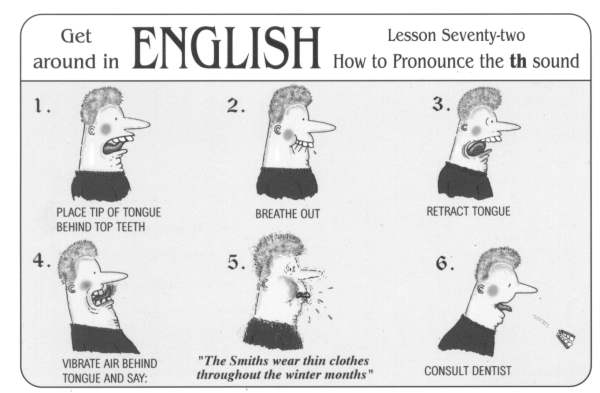
English is often considered one of the hardest languages to pronounce for learners. This difficulty mainly comes from the way spelling and pronunciation do not match consistently. Here are the main reasons:
1. Spelling and pronunciation are very inconsistent
In English, the same letter combination can be pronounced in many different ways.
Example with “ough”:
-
though /ðoʊ/
-
through /θruː/
-
tough /tʌf/
-
thought /θɔːt/
-
cough /kɒf/
Because of this, learners often cannot guess the pronunciation from the spelling.
2. Many vowel sounds
English has a large number of vowel sounds.
-
English: about 20 vowel sounds
-
Spanish: 5 vowel sounds
-
Vietnamese: many tones but more consistent spelling
This makes it hard to hear and produce differences like:
-
ship vs sheep
-
full vs fool
3. Silent letters
English contains many silent letters that are written but not pronounced.
Examples:
-
knife → k is silent
-
honest → h is silent
-
island → s is silent
Learners must memorize these cases.
4. Consonant clusters
English allows many consonants together in a word.
Examples:
-
strengths
-
texts
-
splits
For many learners, especially from Asian languages, these clusters are difficult to pronounce smoothly.
5. Stress patterns
English uses word stress and sentence stress.
Example:
-
REcord (noun)
-
reCORD (verb)
If stress is wrong, the word may sound unnatural or confusing.
6. Many accents
English is spoken worldwide, so pronunciation varies across accents such as:
-
United States
-
United Kingdom
-
Australia
-
Canada
The same word may sound different depending on the accent.
✅ Summary
English pronunciation is difficult because it has:
-
inconsistent spelling
-
many vowel sounds
-
silent letters
-
complex consonant clusters
-
stress patterns
-
many accents
STAY IN THE LOOP
Subscribe to our free newsletter.
Leave A Comment

French is one of the world’s major international languages, widely used in business, diplomacy, education, tourism, and international cooperation. As communication between French-speaking countries and the rest of the world continues to create professional opportunities, skilled French interpreters play an important role in helping people communicate across language barriers. If you are passionate about languages

French and English are two widely used languages in international business, diplomacy, education, tourism, and global communication. As organizations continue to work across linguistic and cultural boundaries, the ability to communicate accurately between these languages remains valuable. For people who enjoy languages and cross-cultural communication, becoming a French and English interpreter can be a rewarding

English is one of the most widely used languages for international communication. As businesses, organizations, and individuals increasingly work across borders, the demand for professional English interpreters continues to grow. If you have strong English skills, enjoy communicating with people, and are interested in working in a multicultural environment, becoming an English interpreter can be

If you want to become a French interpreter, you’ll need more than just strong French—you need to develop professional interpreting skills, subject knowledge, and experience. A practical path Reach a high level in French Aim for C1–C2 French, especially listening and speaking. If you’re in Vietnam, the DELF/DALF can provide formal evidence of your French